What Is a Coriolis Mass Flow Meter?
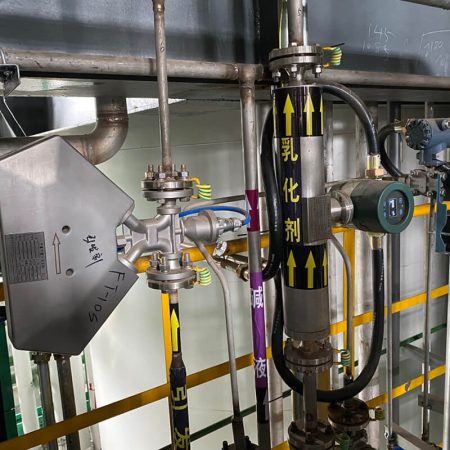
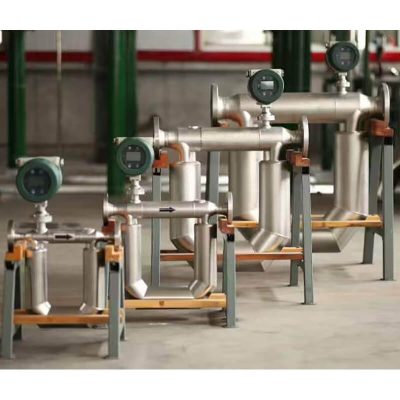
Coriolis mass flow meter is a new type of traffic measuring instrument developed by our company in accordance with the principle of Korioli. Can directly measure the mass flow and density of the fluid in the closed pipeline. The flow meter is composed of the flow measurement sensor and the signal converter.
Coriolis mass flow meter is a device that measures liquid, steam or gas quality flow through the pipeline system. It is considered to be the most accurate quality flowmeter type, and is widely used in industrial applications, laboratories and other situations that require high precision.
Coriolis mass flow meter uses motion to measure the rate of liquid and gas flowing through the pipeline. Coriolis mass flow meter is accurate and widely used, which can be used to measure various fluids.
How Does a Coriolis Flow Meter Work?
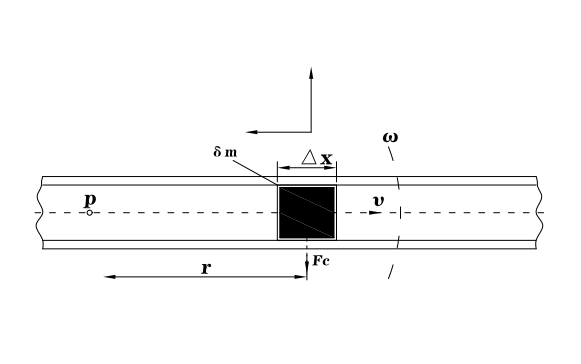
Coriolis mass flow meter uses Korio’s effect to measure quality flow. That is, when the fluid flows through the vibration pipe, it will generate a proportional to reversing force to the tube, and then the sensor will detect the torture force to determine the flow.
Coriolis mass flow meter measures quality through inertia. When a mass point in the tube with P as a fixed point (rotation center) is used to move the rotation center or the departure center, it will generate an inertial force. The liquid or gas flows through a pipe vibration vibration by a small force.
For specific rotation pipes, the frequency characteristics are certain, so the quality flow can be measured directly or indirectly. In essence, the faster the fluid flows, the greater the torsional force in the tube. Therefore, quality flow can be measured directly without considering pressure or temperature changes.
Coriolis Mass Flow Meter Series and Characteristics
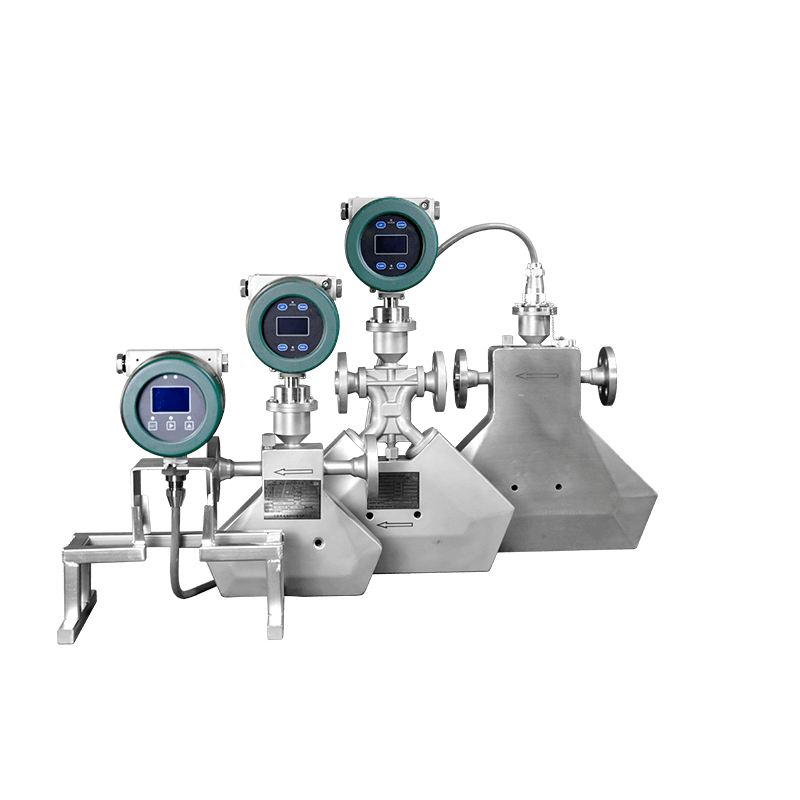
T Series Mass Flow Meter for Liquids and Gases has a triangular sensor structure. The minimum diameter can be DN3. More suitable for low flow measurement to ensure measurement accuracy.
1. Able to directly measure the mass flow of fluid (this is of great significance for the measurement and control of production processes such as energy measurement and chemical reactions);
2. High measurement accuracy (measurement accuracy can be guaranteed to be between 0.1% and 0.5%);
3. The measurable ratio is large. Generally, the measurable ratio to ensure basic accuracy is 10:1 or 20:1;
4. It has a wide range of applications. In addition to normal fluid (gas and liquid) measurements, it can also measure industrial media that are difficult to measure with general fluid measuring instruments. Such as high viscosity fluids, various slurries, suspensions, etc.;
5. Completely provide mass flow, volume flow, density, temperature measurement and calculation parameters. Reliable results can be obtained without cumbersome conversions, and the volume can be directly replaced;
6. Compact triangular shell structure saves installation space, is simple to install, and does not require upstream and downstream straight pipe sections;
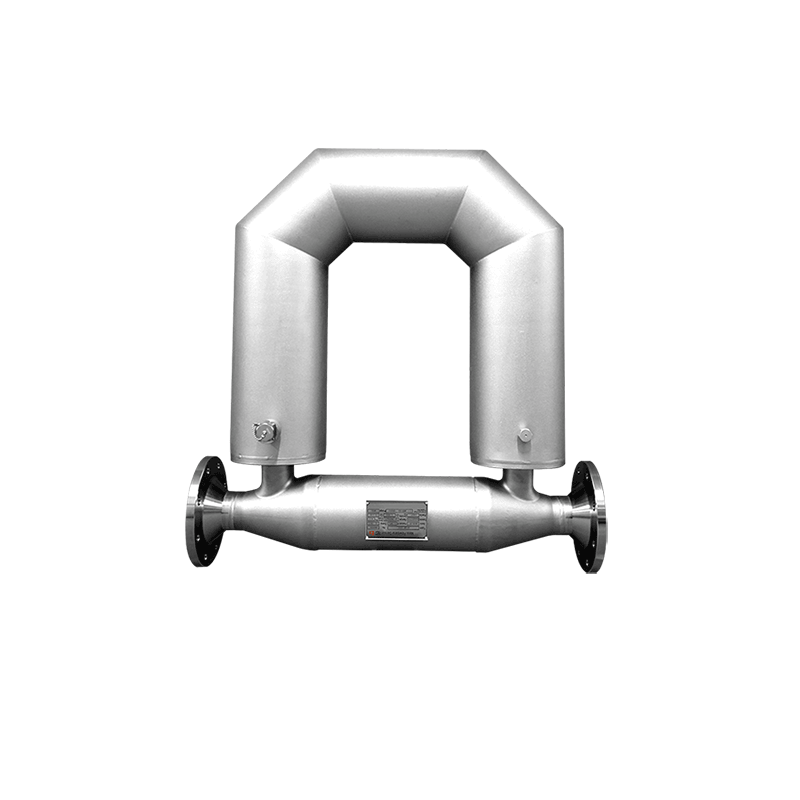
The U Series Digital coriolis flow meter provides accurate and stable flow and density measurements. Sino-Inst’s Digital coriolis flow meters are used in all industries as well as process control, trade settlement, high temperature, high pressure, high viscosity fluids, etc.
1. High accuracy measurement ±0.1~0.2%;
2. Broad application range: 316L stainless steel structure is suitable for a variety of media, and the instrument coefficient is not affected by liquid measurement. Ability to accurately measure gases;
3. Multi-variable flow: Provides accurate measurement for a range of variables, including mass flow, volume flow, total flow, density and temperature, etc.;
4. Adopt MVD multi-variable digital technology converter: the transition from analog signal processing to digital signal processing can produce stable signals, thereby improving response speed and measurement accuracy;
5. Easy to use: LCD display, users can directly and conveniently perform configuration operations through touch buttons in English.
6. Reliability and repeatability: Wear-free movable parts enable the instrument to maintain long-term reliability and repeatability, and ensure high-precision flow and density measurements in routine process control applications.
7. The internal U-shaped measuring tube design of the sensor has no moving parts or any flow-blocking components, making it maintenance-free in the future.
8. Low installation requirements, no front and rear straight pipe requirements, simple and convenient operation.
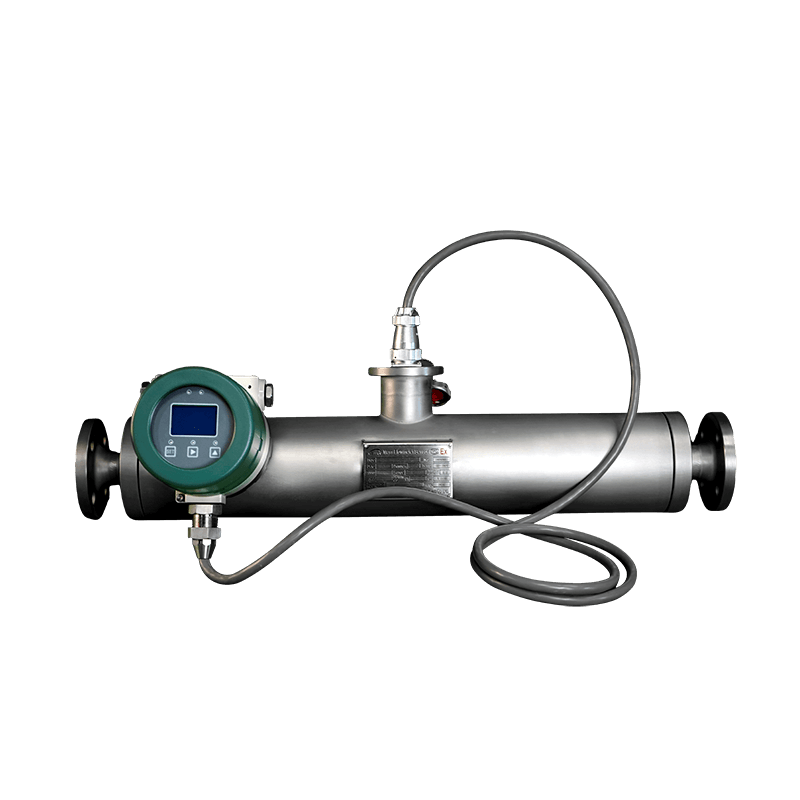
Straight tube coriolis mass flow meter Z-Series can measure mass flow, volume flow, temperature, density, concentration, etc. High-precision measurement while saving installation space and reducing pressure loss.
1. Straight tube structure, small pressure loss. Energy saving can be increased by more than 50%;
2. The sensor is small in size and light in weight. Small installation space;
3. Accuracy 0.1%. The range ratio can reach 1:20;
4. No material will be deposited, making it easy to clean. Can be made into hygienic type. Meet 3A food grade hygiene standards;
5. The working frequency is high and it is not easily affected by external industrial vibration frequency interference;
6. Low temperature type and high temperature type can be customized. The lowest measurable medium is -200℃.
7. High pressure can be customized to 10MPa.
Advantages of Coriolis Flow Meters
1. High measurement accuracy: Even when the properties of the medium, such as fluid density and viscosity, fluctuate, the instrument maintains stable and precise mass flow measurement. It offers strong resistance to interference and delivers reliable measurement data.
2. Direct mass flow measurement: As you can measure mass flow directly, there is no need to convert it from volumetric flow. This makes it perfect for complex operating conditions where fluid density changes significantly, as it eliminates errors caused by conversion.
3. Bidirectional flow measurement:Accurately measures medium flow in both forward and reverse directions, making it suitable for special process scenarios such as loop transfer and reverse unloading.
4. Wide measurement range:It achieves high-precision detection across both high and low flow ranges, with an excellent turndown ratio. This meets flow monitoring requirements under varying production loads.
5. Simultaneous density measurement: The integrated density measurement functionality collects fluid density data in real time. Combined with mass flow parameters, it enables the rapid and precise conversion to volumetric flow. This offers the advantage of a single instrument with multiple functions.
6. Built-in temperature compensation: The integrated density measurement functionality collects fluid density data in real time. Combined with mass flow parameters, it enables the rapid and precise conversion to volumetric flow. This offers the advantage of a single instrument with multiple functions.
7. Minimal operating pressure drop: With no throttling or flow-restricting structures inside the pipeline, the medium flows smoothly, resulting in low pressure loss during operation and reduced energy consumption for conveyance.
8. No mechanical moving parts: The absence of wear-prone moving components such as impellers or gears effectively reduces equipment wear and ageing, leading to a low failure rate and minimal routine maintenance requirements.
9. Strong adaptability to operating conditions: It is suitable for various liquid media of different viscosities and temperatures, as well as certain mixed and homogeneous fluids. This gives it broad coverage across industrial applications.
10. Flexible installation requirements: There aren’t any strict requirements for upstream and downstream straight pipe sections, which makes on-site wiring, installation and commissioning simple and flexible, and shortens the construction cycle.
11. Rapid response: It responds quickly and can handle changes in flow rate as they happen, making it great for situations where the fluid flow changes a lot.
12. Comprehensive signal output:Its compatibility with a wide range of industrial automation systems, coupled with its ability to transmit remote signals in multiple ways, makes it easy to monitor, record and manage your data remotely.
Limitations of Coriolis Flow Meters
1. High procurement costs:The equipment itself is expensive, requiring a much higher initial investment than conventional flow meters, such as vortex or differential pressure types. This puts more pressure on overall project procurement costs.
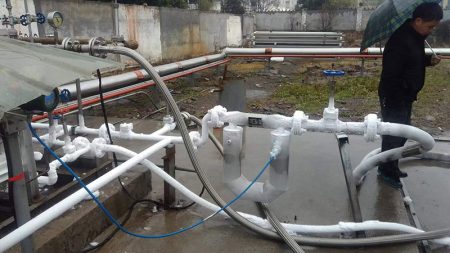
2. Strict installation requirements:High demands are placed on on-site mounting, pipe vibration control and structural reinforcement; pipe vibration and external interference can directly affect measurement accuracy.
3. Significant susceptibility to bubbles in the medium:Measurement errors increase significantly in the presence of bubbles in the fluid or when dealing with two-phase gas-liquid media. This renders the method unsuitable for applications involving high-gas-content media.
4. Inability to measure media containing large particulate impurities: If the liquid has a lot of solid particles or crystals in it, the tube can wear out, which means the equipment won’t last as long.
5. Heavy weight and large footprint: The same size of equipment is usually pretty heavy, especially the bigger models. This means you have to use stronger mounting brackets, which increases the cost of installation and construction.
6. Restrictions in high-pressure and high-temperature conditions: The range of available models is limited under extreme conditions of ultra-high temperature and pressure, and the cost of special, customised models increases further.
7. Susceptibility to low flow rates: Measurement stability decreases under low-flow conditions, and performance in low-flow applications is inferior to that of conventional instruments.
8. Difficulty in maintenance: The internal structure is intricate and complex, so if there’s a fault, it’s tricky to repair and replace components, which means longer repair cycles and higher costs.
9. Limited environmental adaptability: Without extra protective measures, you’re likely to experience data drift and inaccurate measurements in industrial environments with strong electromagnetic interference or severe vibration.
Practical Applications of Coriolis Flow Meters
Thanks to their high accuracy and ability to adapt to complex operating conditions, Coriolis flow meters are widely used across multiple industries. Their core applications are summarised below:
1. Petrochemical and Natural Gas Industries: They are used for trade settlements involving crude oil and refined petroleum products, as well as for measuring the loading, unloading and storage of LNG. They are suitable for high-viscosity fluids and can also be used to monitor natural gas production output, meeting the core metering requirements of the oil and gas industry.
2. Chemical Industry: Suitable for a wide range of chemicals, including acids and alkalis, and capable of measuring medium concentration. Utilising gas-handling technology, it achieves stable measurement even under conditions of fluctuating gas content.
3. Food and Life Sciences Industry: Thanks to its hygienic design, which meets GMP requirements, it is suitable for various food and pharmaceutical applications. It ensures consistent product formulation thanks to its high level of precision.
4. Measurement of media containing solids and high-viscosity media: Specialises in measuring media such as bitumen, sludge and jam; with no moving parts, it is resistant to blockages and is suitable for harsh operating conditions such as those found in mining and wastewater treatment.
5. Gas measurement scenarios:Directly measures gas mass flow; suitable for medium- and high-pressure, low-temperature gases and gas mixtures; not suitable for atmospheric pressure, high-flow, low-density gases; can be used for metering in CNG and LPG refuelling stations.
6. Special operating conditions and high-end applications: It is suitable for use in extreme temperatures and is compliant with trade settlement and SIS system standards. It is also suitable for measuring rocket engine propellants and is capable of covering the full flow range.
7. Other general applications: It replaces the usual weighing methods used in industries like metallurgy and building materials, and it can measure multiple parameters at the same time. It also has self-monitoring and diagnostic functions to make sure the process stays stable.
Coriolis vs Thermal Mass Flow Meters
1. Different operating principles:
Coriolis flowmeters work by measuring the torsional force generated as the fluid flows through a vibrating tube, which allows them to calculate mass flow directly. They don’t change much when it comes to temperature, pressure and density.
Thermal mass flowmeters work by measuring how fast heat is carried away from the sensor by the gas. They also need the temperature and pressure of the gas to be just right.
2. Different Applicable Media:
Coriolis flowmeters have a wide range of applications and can measure liquids and gases, including corrosive and viscous fluids, as well as multiphase fluids containing solid particles.
Thermal mass flowmeters are primarily suitable for clean, dry gases and are not suitable for gases containing large amounts of moisture, oil mist or contaminants; they cannot measure liquids or fluids containing solids.
3. Differences in measurement accuracy:
Coriolis flowmeters are really accurate, usually between ±0.1% and ±0.5%, and some high-precision models can even go down to ±0.05%. They’re really reliable and great for precise measurements.
Thermal mass flowmeters aren’t as accurate, usually about ±1% to ±2.5%, and they’re not as repeatable as Coriolis flowmeters. But they’re good enough for most gas measurement needs.
4. Differences in response time and installation requirements:
Coriolis flowmeters have a relatively slow response, particularly under low-flow conditions, and require a longer straight pipe run. They must be shielded from external vibration and can be installed in multiple orientations.
Thermal mass flowmeters have a faster response, making them suitable for scenarios with rapidly changing flow rates. They have lower requirements for straight pipe runs but typically need to be installed horizontally to ensure uniform gas flow.
5. Application scenarios and costs differ:
Coriolis flowmeters are used a lot in the petrochemical, food and pharmaceutical industries, and they’re great for high-precision stuff like trade settlement and precise process control. They can be a bit pricey, though, especially the large-bore models.
Thermal mass flowmeters are mostly used for measuring gas in industrial gas supply and combustion systems. They’re cheaper, easy to maintain, and great for regular gas metering needs when budgets are tight.
When it comes to making stuff in factories, measuring fluids by the volume is way more useful than measuring them by the volume. The Coriolis flowmeter is a direct mass measurement instrument that collects data using the Coriolis force generated in the vibrating measuring tube.
This overcomes the measurement limitations of traditional flowmeters and offers features such as multi-functional measurement, no requirement for straight pipe runs, and bidirectional measurement, gradually becoming an indispensable piece of measurement equipment in demanding industrial environments.